
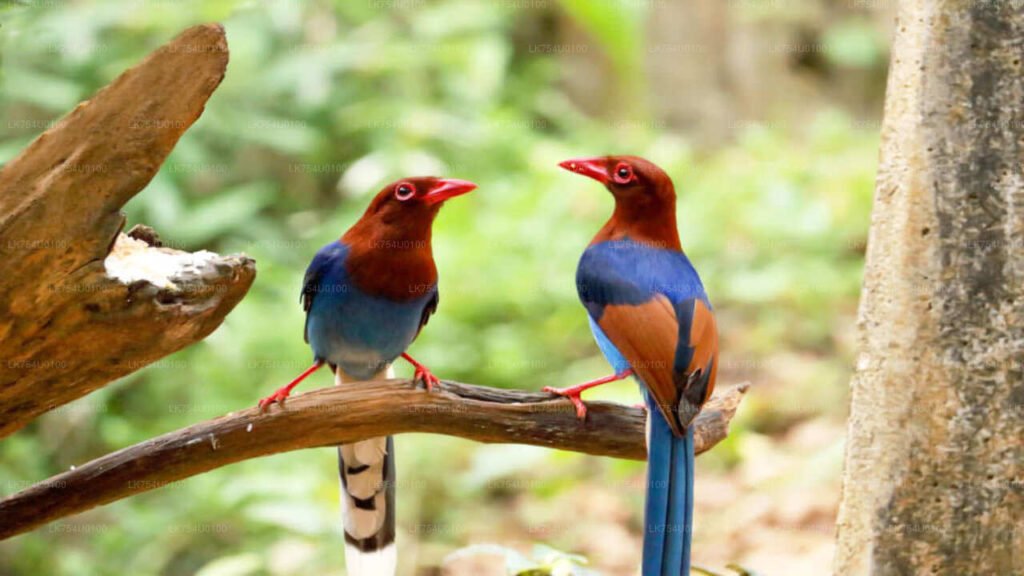
For serious birders, Sinharaja isn’t just a destination; it’s a pilgrimage. This forest is home to 20 of Sri Lanka’s 34 endemic bird species, including some of the most elusive feathered creatures on the planet.
A Sinharaja Bird Watching Tour is a specialized experience that differs from a standard hike. It requires patience, silence, and the keen eyes of a specialist naturalist guide who can identify a bird by a single “chip” from the high canopy.
🦅 The Phenomenon: The “Bird Wave”
The highlight of any Sinharaja birding trip is the Mixed-Species Feeding Flock. Sinharaja holds the record for the world’s longest-running study of these flocks.
- How it works: Different species travel together in a fast-moving “wave” to improve foraging efficiency and protection from predators.
- The Leaders: The Orange-billed Babbler and the Greater Racket-tailed Drongo are the vocal leaders of the pack.
- The Sight: Watching 30 to 50 birds of 10 different species erupt through the trees at once is an adrenaline-pumping experience for any nature lover.
📸 Top Species to Check Off Your List
In 2026, birders are still flocking to spot these iconic residents. If you see three or more of these in one day, consider it a massive success!
| Bird Species | Status | Why they are special |
| Sri Lanka Blue Magpie | Endemic | Stunning blue and chestnut plumage; surprisingly bold. |
| Red-faced Malkoha | Endemic | A canopy-dweller with a bright red face mask; very shy. |
| Serendib Scops Owl | Endemic | Discovered only in 2001; one of the rarest owls in the world. |
| Sri Lanka Frogmouth | South Asian Endemic | Perfectly camouflaged to look like a dry leaf or branch. |
| Green-billed Coucal | Endemic | Lives in the deep bamboo undergrowth; more often heard than seen. |
| Malabar Trogon | Regional | One of the most colorful birds in the forest, often seen sitting motionless. |
🔭 Birding Logistics: What to Expect
The Morning “Stake-out”
Tours usually begin at 5:30 AM or 6:00 AM. Most specialist guides will take you to known “stake-out” points where rare birds like the Sri Lanka Spurfowl come out to feed at dawn before the crowds arrive.
Specialist Naturalist Guides
Unlike general trekking guides, birding guides carry high-powered spotting scopes and are experts in bird calls. In 2026, many use digital apps like Merlin (Sri Lanka region) to confirm sightings, but their ears remain their best tool.
Photography Tips
- Low Light: The forest floor is dark. You’ll need a “fast” lens (f/2.8 or f/4) and high ISO capabilities.
- Tripod/Monopod: Essential for stable shots in the humid, dim environment.
- Weather Sealing: Essential. Your gear will get misty or damp.
🗓️ Peak Season for Birders
While resident birds are here year-round, the best time for bird watching is November to April.
- Migrants: During these months, you’ll also see winter visitors like the Indian Pitta (locally called the “6 o’clock bird”).
- Weather: Lower rainfall means fewer clouds, giving you better light for photography.
🎒 Specialized Birding Gear
Beyond the standard hiking kit, birders should bring:
- Binoculars: 8×42 or 10×42 are the industry standards for rainforest birding.
- Field Guide: A Field Guide to the Birds of Sri Lanka by Deepal Warakagoda is the “Bible” for this region.
- Silent Clothing: Avoid “swish-swish” synthetic fabrics. Choose muted greens, browns, or greys.
Pro Tip for 2026: If you are staying overnight, look for an Eco-Lodge with a bird-feeding station. Many endemics, like the Sri Lanka Grey Hornbill and Yellow-fronted Barbet, often visit the gardens of lodges near the Kudawa entrance for a morning snack.