
Photography Tours: Capturing the Sinharaja Jungle
If the canopy is the forest’s crown, then light is its elusive ghost. While most forests offer wide vistas, a Sinharaja Photography Tour is a masterclass in detail, shadows, and the “Green Twilight”—a world where the sun rarely touches the floor, and every frame tells a story of ancient survival.
For photographers in 2026, Sinharaja isn’t just a destination; it’s a high-stakes challenge. Between the 90% humidity and the unpredictable dappled light, coming home with a “National Geographic” shot requires more than just a good lens—it requires the patience of the forest itself.
📸 The Gear: Choosing Your Weapon
In the rainforest, you are either looking up at the sky or down at the moss. There is very little middle ground.
- The Macro Specialist: For the “Small Giants.” You’ll want a 90mm or 100mm Macro lens to capture the dew on a rare orchid or the scales on a Green Pit Viper.
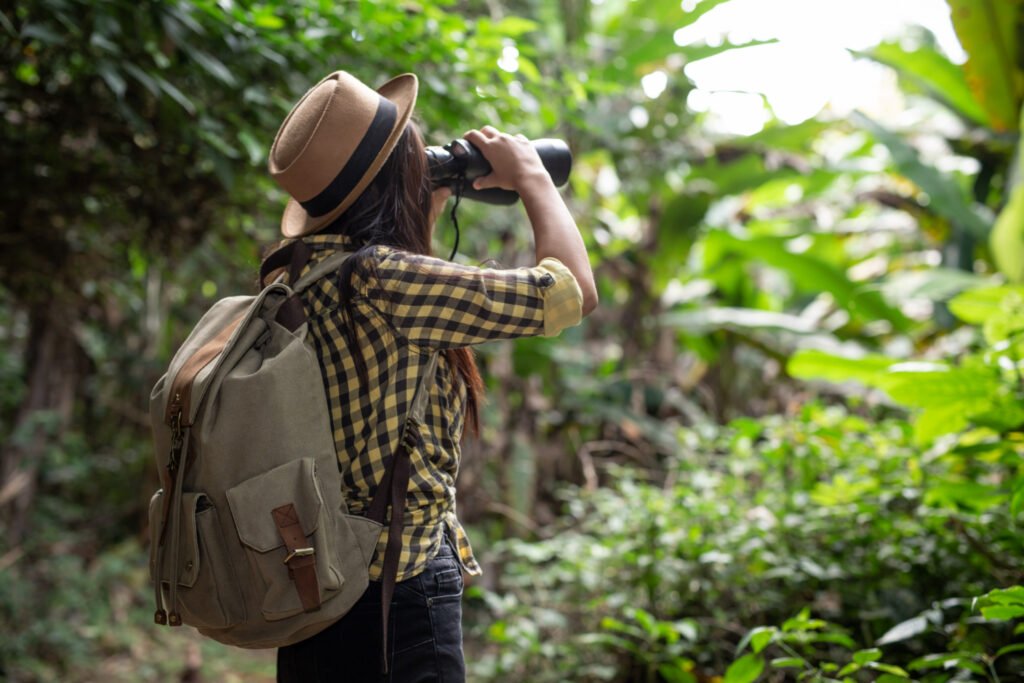
- The Canopy Chaser: For the birds and primates. A 400mm to 600mm telephoto is essential. Most endemics, like the Red-faced Malkoha, stay high in the Dipterocarp giants, meaning you’ll be shooting against a bright sky from a dark forest floor.
- The “Green Twilight” Kit: Because of the low light, a tripod or monopod is non-negotiable for sharp images, as is a weather-sealed camera body to withstand the constant mist.
🌓 Mastering the Light
Rainforest photography is a game of “bracketing.” The contrast between a bright patch of sky and a dark fern is often too much for a sensor to handle in one go.
- Embrace the Overcast: Ironically, the best photography happens when it’s cloudy. The clouds act as a massive softbox, eliminating harsh shadows and making the vibrant greens of the forest “pop” without overexposing.
- The ISO Trade-off: Don’t be afraid to push your ISO to 1600 or 3200. In the 2026 era of AI-denoising software, a sharp, grainy image is infinitely better than a clean, blurry one.
- Fill-Flash Ethics: While a small burst of fill-flash can bring out the colors of a lizard, many specialist guides now discourage high-power flashes for birds to prevent startling them in their nesting sites.
🕒 The Photographer’s Timeline
A standard trek is 4 hours, but a photography tour is an all-day (or multi-day) affair.
| Time | Target | Photography Style |
| 05:45 AM | Mist-shrouded valleys | Wide-angle / Landscapes |
| 07:30 AM | Bird Waves | Fast shutter / High ISO |
| 11:00 AM | Reptiles & Orchids | Macro / Tripod-based |
| 07:00 PM | Tree Frogs & Slender Loris | Night Macro / Red-light focus |
📍 The Best “Frames” in the Forest
- The Morningside Entrance: Famous for its “Cloud Forest” vibes. It’s the best spot for landscape photographers looking for rolling hills of tea transitioning into misty jungle.
- The Giant Fern Trails: Near the Kudawa entrance, the prehistoric tree ferns create a “Jurassic Park” aesthetic that is perfect for wide-angle environmental portraits of your group.
- The Martin’s Lodge Balcony: Often cited as the best place in the world to photograph the Sri Lanka Blue Magpie at eye level without ever leaving your coffee behind.
🛡️ Survival Tips for 2026 Tech
- Silica Gel is Life: Keep your camera bag stuffed with industrial-sized silica gel packets. Moving from an air-conditioned van into the humid forest will instantly fog your internal glass.
- Lens Hoods Always On: Not just for the sun, but to keep the constant “drip-drip” of the canopy off your front element.
- The “Naturalist” Advantage: Don’t just book a guide; book a Photographic Naturalist. They understand “composition” and will know exactly which side of the tree to position you on so the light hits the subject’s eye.